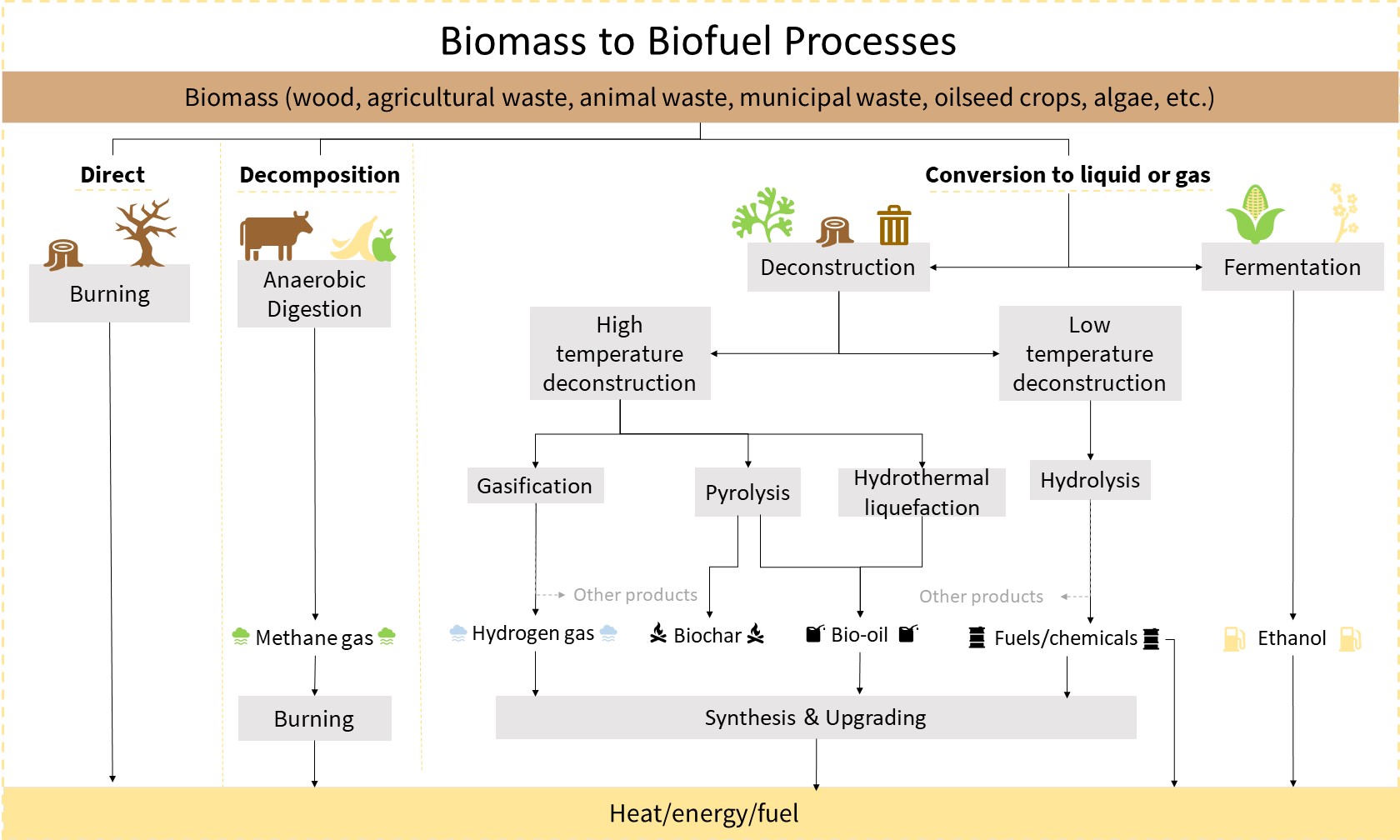









There are several processes that convert biomass to fuels that power homes, create fuel for vehicles, and fulfill other energy needs. How biomass is processed depends on the type of biomass (e.g., manure or oilseed crops) and how it will be used (e.g., to fuel cars or power generators). The three main processes by which energy can be obtained from biomass are:
- Direct consumption by burning solid fuel to power generators.
- Bacterial decomposition, which is also called anaerobic digestion. In this process, bacteria digest wet waste without being exposed to oxygen to create methane gas.
- Conversion to liquid or gaseous fuels.
Both direct consumption and bacterial decomposition make energy that can be used to generate heat to power generators. To make biomass into liquid or gaseous fuels, biofuels must be converted from their original form. The most basic way to do this is through fermentation of crops that are high in sugar (starch) or fat into ethanol, which can be mixed directly with gasoline to power cars. In the Northwest, oilseed crops like canola or sunflowers are used to make biofuels. For a more advanced process that requires breaking down the cell walls of plants into their most basic chemical form, energy producers use a two-step process: deconstruction followed by synthesis and upgrading. The first step, deconstruction, breaks the biomass down into its most simple components and can happen at either low or high temperatures. High temperature deconstruction includes:
-
Pyrolysis (video) in which biomass is broken down without oxygen to make bio-oil and biochar.
-
Hydrothermal liquefaction (video from Pacific Northwest National Laboratory), which uses wet biomass, such as algae, sewage, or a liquid slurry of feedstock, to make bio-oil.
-
Gasification, in which biomass is cooked at a high temperature in the presence of oxygen or steam to make hydrogen gas, then cleaned up and conditioned to make it into a usable fuel.
 Biofuels: A new era of extraction
Low temperature deconstruction includes:
-
Hydrolysis (video), in which biomass is first pretreated chemically or mechanically to open the structure of plant cell walls and then broken down with either chemicals or special proteins to make fuels or products that can then be made into fuels.
The second step, synthesis and upgrading, then rebuilds these components into usable fuel (either liquid or gas). There are many types of synthesis and upgrading, and they vary based on which products come out of deconstruction and what types of compounds are being made.