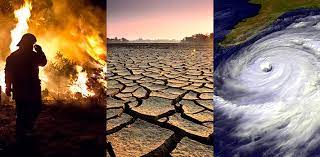
Environmental phenomena such as climate change and its manifestations, including extreme weather events, are featuring more prominently on the risk radar of investors, banks and commercial farmers, as agricultural activity intensifies in order to provide sufficient food for a growing population.
A global review of extreme heat has found that between May 2024 and May 2025, nearly half the world’s people (49% or 4 billion) suffered through an extra 30 days of temperatures that were hotter than those experienced 90% of the time between 1991 and 2020.
NOAA's National Centers for Environmental Information calculates the global temperature anomaly every month based on preliminary data generated from authoritative datasets of temperature observations from around the globe. The major dataset,NOAAGlobalTemp version 6.0.0, uses comprehensive data collections of increased global area coverage over bothlandandoceansurfaces. NOAAGlobalTempv6.0.0 is a reconstructed dataset, meaning that the entire period of record is recalculated each month with new data. Based on those new calculations, the new historical data can bring about updates to previously reported values. These factors, together, mean that calculations from the past may be superseded by the most recent data and can affect the numbers reported in the monthly climate reports. The most current reconstruction analysis is always considered the most representative and precise of the climate system, and it is publicly available throughClimate at a Glance.
May
The May 2025 global surface temperature was 1.10°C (1.98°F) higher than the 20th-century average. This was the second-warmest May since NOAA's records began in 1850 (176 years). Only May of 2024 was warmer, with a temperature 0.08°C (0.14°F) higher than 2025. The May 2025 global surface temperature was 0.10°C (0.18°F) higher than in 2020, which currently holds the third-warmest May on record. May 2020 notably marked the first time a May temperature reached 1.0°C (1.8°F) above the 20th-century average. The ten warmest Mays on record have all occurred since 2014. May 2025 also marked the 49th consecutive May with above-average global temperatures.
Powered byZingChart
The global land-only surface temperature for May 2025 was also the second-highest in the 176-year record, with a temperature 1.61°C (2.90°F) higher than the 20th-century average. May 2024 was the warmest on record, with a temperature 1.63°C (2.93°F) higher than average. The global ocean-only May surface temperature was 0.88°C (1.58°F) higher than average — also the second-highest for May in the 176-year record. Only May 2024 was warmer (+0.98°C / +1.76°F).
El Niño-Southern Oscillation (ENSO), a weather phenomenon that can affect global weather patterns and influence global temperatures, persisted in a neutral phase (meaning neither El Niño nor La Niña were present) during May 2025. According toNOAA's Climate Prediction Center, ENSO-neutral is likely to continue through the Northern Hemisphere summer (Southern Hemisphere winter).
May 2025 Blended Land and Sea Surface Temperature Anomalies in degrees Celsius
May 2025 Blended Land and Sea Surface Temperature Percentiles
Asmoothed mapof blended land and sea surface temperature anomalies is also available.
May temperatures were much warmer than average across much of the globe, in particular across most ocean areas and parts of every continent. Temperatures were most notable in northern North America, the central and southern parts of South America, the British Isles and surrounding ocean, northern and southwestern Asia, and across much of Antarctica and the Arctic region, where temperature departures were +1.5°C / +2.7°F or higher. Despite the unusual warmth across much of the globe, record-warm temperatures were limited to parts of the Arctic region, the British Isles and surrounding ocean, southwestern Asia, across parts of the western Indian Ocean, the western Pacific Ocean, and a small area in Mexico. Overall, approximately 7% of the world's surfaces had a record-high May temperature. This percentage is the second-highest on record for May, following the all-time record of 15% set in May 2024.
Cooler-than-average May temperatures were observed across India, parts of the northern Atlantic Ocean, eastern and southeastern Pacific Ocean, central and eastern Europe, and eastern Antarctica. As shown on the percentiles map, there were no land or ocean areas with record-cold temperatures in May.
Regionally, South America and Asia had their third-warmest May on record. While the Arctic had its fourth warmest, North America and Africa had their sixth- and tied seventh-warmest Mays, respectively. Europe, Oceania, and the Antarctic region had a warmer-than-average May; however, their May temperature did not rank among the 10 warmest Mays on record. Other regions with significant warmth in May included the Caribbean and Hawaiian regions, which recorded their fifth- and seventh-warmest Mays on record, respectively. Please note that both of these regions include the islands and their surrounding ocean.
May 2025 was warmer-than-average for theUnited Kingdom (UK). It had its fifth-warmest May on record, with a mean temperature 1.3°C (2.3°F) higher than average. Each of the four UK nations experienced a top 10 warm May, with England having its second-warmest May, Northern Ireland its third warmest, and sixth warmest for Wales. Maximum temperature in May 2025 was the warmest on record for the UK as a whole, and individually for England, Wales, and Northern Ireland.
Pakistanhad its fifth-warmest May in the nation's 65-year record, with a national mean temperature 2.12°C (3.82°F) higher than average.
Hong Kong, China, had its 10th-warmest May on record, with a mean temperature that was 0.9°C (1.6°F) above average.
Australiaexperienced above-average May mean temperatures across much of the southern half of Western Australia and eastern Australia. Nationally, the mean monthly temperature was 0.84°C (1.51°F) above the 1961–1990 average, placing this May among the 25 warmest Mays on record. Regionally, New South Wales had its seventh-warmest May in the nation's 116-year record.
May 2025 wasNew Zealand's10th-warmest May on record, with a national average temperature 0.8°C (1.4°F) above the 1991–2020 average.
Following its warmest April on record, the United Arab Emirates (UAE) experienced an unusually warm May with daily temperatures often exceeding 40°C (104°F). This led to the warmest May on record for the UAE. Notably, during May 2025, the UAE recorded two consecutive new maximum (daytime) May temperatures. The highest temperature reached 51.6°C (124.9°F) on May 24, 2025, surpassing the previous May record of 50.4°C (122.7°F) set just the day before (May 23). The record prior to 2025 was 50.2°C (122.4°F) set in 2009.
Icelandexperienced its most significant May heatwave on record during May 2025. The Icelandic Met Office reported that from May 13–22, several locations recorded daily temperatures of 20°C (68°F) or higher. Among automatic weather stations with at least 20 years of data, 94% recorded a new May temperature record during this heatwave. Notably, a new national May temperature record was set on May 15, when the maximum temperature at Egilsstaðir Airport soared to 26.6°C (79.9°F). This new temperature record is 1.0°C (1.8°F) higher than the previous record of 25.6°C (78.1°F) set back on May 26, 1992.
Franceexperienced an intense heatwave in late May, with unprecedented temperatures for the month. Maximum temperatures reached 30°C (86°F) or higher from the southwest to the Loire Valley, breaking multiple maximum temperature records. The heat peaked on May 30, resulting in France's hottest May afternoon on record, with a national maximum temperature indicator of 30.5°C (86.9°F). This marks only the second time since 1947 that the national indicator surpassed 30.0°C (86°F) in May, the first being 20 years ago on May 27, 2005, at 30.3°C (86.5°F).
May Ranks and Records
May
Anomaly
Rank (out of 176 years)
Records
°C
°F
Year(s)
°C
°F
Global
Land
+1.61
+2.90
Warmest
2nd
2024
+1.63
+2.93
Coolest
175th
1867
-1.10
-1.98
Ocean
+0.88
+1.58
Warmest
2nd
2024
+0.98
+1.76
Coolest
175th
1911
-0.51
-0.92
Land and Ocean
+1.10
+1.98
Warmest
2nd
2024
+1.18
+2.12
Coolest
175th
1917
-0.51
-0.92
Northern Hemisphere
Land
+1.80
+3.24
Warmest
2nd
2024
+1.82
+3.28
Coolest
175th
1867
-1.49
-2.68
Ties: 2020
Ocean
+0.92
+1.66
Warmest
3rd
2024
+1.20
+2.16
Coolest
174th
1917
-0.55
-0.99
Ties: 2023
Land and Ocean
+1.30
+2.34
Warmest
3rd
2024
+1.47
+2.65
Coolest
174th
1907
-0.66
-1.19
Southern Hemisphere
Land
+1.16
+2.09
Warmest
8th
2002
+1.75
+3.15
Coolest
169th
1874
-1.41
-2.54
Ocean
+0.85
+1.53
Warmest
1st
2025
+0.85
+1.53
Coolest
176th
1904, 1911
-0.49
-0.88
Land and Ocean
+0.91
+1.64
Warmest
1st
2025
+0.91
+1.64
Coolest
176th
1874, 1911
-0.52
-0.94
Antarctic
Land and Ocean
+0.51
+0.92
Warmest
24th
1983
+1.60
+2.88
Coolest
153rd
1943
-1.20
-2.16
Arctic
Land and Ocean
+2.31
+4.16
Warmest
4th
2019
+2.54
+4.57
Coolest
173rd
1867
-2.49
-4.48
500 mb maps
In the atmosphere, 500-millibar height pressure anomalies correlate well with temperatures at the Earth's surface. The average position of the upper-level ridges of high pressure and troughs of low pressure—depicted by positive and negative 500-millibar height anomalies on the map—is generally reflected by areas of positive and negative temperature anomalies at the surface, respectively.
Seasonal Temperature: March–May 2025
Globally, the March–May 2025 surface temperature was 1.22°C (2.20°F) higher than the 20th-century average and was the second-warmest on record (out of 176 years). This value was only 0.05°C (0.09°F) cooler than the record set only the year prior (2024). The ten warmest March–May periods have all occurred since 2015.
The global land-only surface temperature during March–May was the highest on record, with a temperature 1.96°C (3.53°F) higher than average. This value surpassed the previous record set back in 2016 by 0.04°C (0.07°F). The global ocean-only surface temperature was 0.88°C (1.58°F)—the second-highest on record. Only March–May of 2024 was warmer (+1.00°C / +1.80°F).
March–May 2025 Blended Land and Sea Surface Temperature Anomalies in degrees Celsius
March–May 2025 Blended Land and Sea Surface Temperature Percentiles
Asmoothed mapof blended land and sea surface temperature anomalies is also available.
The March–May period is the meteorological spring for the Northern Hemisphere and autumn in the Southern Hemisphere. The Northern Hemisphere spring was the second-warmest on record, with a temperature 1.54°C (2.77°F) higher than average. This value was 0.08°C (0.14°F) shy of tying the record set in spring of 2024. The Southern Hemisphere autumn was also the second-warmest on record, with a temperature of 0.90°C (1.62°F) higher than average. The autumn of 2024 was warmer at +0.92°C (+1.66°F).
The March–May three-month period saw widespread warmer-than-average temperatures across much of the globe. The highest temperature departures, 2.0°C (3.6°F) or higher, were observed across significant portions of Asia and the Arctic and Antarctic regions. Record-high March–May temperatures were specifically noted in the British Isles and surrounding ocean, as well as in parts of the Canadian Arctic Archipelago, southern Asia, and the Pacific, Indian, Atlantic and Southern Oceans.
In contrast, cooler-than-average March–May temperatures were present in some areas, including parts of the North Atlantic Ocean, India, the Southern Ocean off the coast of southern Argentina and Chile, and eastern Antarctica. However, no land or ocean areas had record-cold March–May temperatures.
The Arctic region, North America, South America, Europe, Africa, Asia, and Oceania all saw their March–May temperatures rank among the five highest for March–May on record. Notably, Europe, Asia, and Oceania had their second-warmest March–May period on record. The Arctic region had its third-warmest spring. Although the Antarctic region experienced a warmer-than-average autumn, its autumn temperature did not place within the top 10 warmest autumns on record.
In addition, both the Hawaiian and Caribbean regions also had a warm spring. The Hawaiian region experienced its second-warmest spring on record, with a temperature 1.02°C (1.84°F) higher than average. This was surpassed only by the spring of 2017, which was 0.08°C (0.14°F) higher than 2025. The spring temperature for the Caribbean region tied as the third warmest on record.
Select national information is highlighted below:
TheUnited Kingdom (UK)had its warmest spring since national records began in 1884, with a mean temperature 1.4°C (2.5°F) above average. This surpassed the previous record set in 2024. The Met Office notes that eight of the UK's 10 warmest springs have occurred since 2000, with the three warmest springs all occurring since 2017. All four nations within the UK also experienced their warmest spring. Notably, Northern Ireland's spring 2025 temperature exceeded its previous record set in 1893. The UK also had its warmest spring on record for maximum (daytime) temperatures, exceeding the previous record from 1893 by 0.6°C (1.1°F).
The unusual warmth in the UK extended beyond land areas. Since March, an intense and persistentmarine heat waveaffected the sea surface waters west of Ireland and along the UK's western coastline. According to the Met Office, the sea surface temperatures were as high as 4.0°C (7.2°F) warmer than normal west of Ireland and up to 2.5°C (4.5°F) warmer along the UK's western coast by mid-May. Sea surface temperatures in the region set new high records during April and May, the highest since records began in 1982. A contributing factor to this marine heat wave was a prolonged high pressure system that brought sunny conditions and weak winds, creating ideal warming conditions. While marine heat waves in this region typically last two to four weeks, this one has been ongoing since March, making it one of the longest for the region at this time of year.
Spring 2025 was warm and dry acrossGermany. The national average temperature was 0.9°C (1.6°F) higher than the 1991–2020 average and was the eighth-warmest spring since national records began in 1881.
Warmer-than-average autumn mean temperatures were widespread across much ofAustralia, resulting in the nation's fourth-warmest autumn (1.41°C / 2.54°F above the 1961–1990 average) since national records began in 1910. Every Australian state had an above-average autumn temperature. Of note, Victoria had its warmest autumn on record. New South Wales and Western Australia had their second-warmest autumn, South Australia had its third warmest, and Tasmania its sixth warmest on record.
New Zealandhad warmer-than-average autumn temperatures. Averaged across the nation, the March–May temperature was 1.0°C (1.8°F) higher than average and was New Zealand's fifth-warmest autumn since national records began in 1909.
March-May Ranks and Records
March-May
Anomaly
Rank (out of 176 years)
Records
°C
°F
Year(s)
°C
°F
Global
Land
+1.96
+3.53
Warmest
1st
2025
+1.96
+3.53
Coolest
176th
1867
-1.05
-1.89
Ocean
+0.88
+1.58
Warmest
2nd
2024
+1.00
+1.80
Coolest
175th
1911
-0.49
-0.88
Land and Ocean
+1.22
+2.20
Warmest
2nd
2024
+1.27
+2.29
Coolest
175th
1917
-0.56
-1.01
Northern Hemisphere
Land
+2.37
+4.27
Warmest
1st
2025
+2.37
+4.27
Coolest
176th
1867
-1.28
-2.30
Ocean
+0.91
+1.64
Warmest
2nd
2024
+1.15
+2.07
Coolest
175th
1917
-0.54
-0.97
Ties: 2020
Land and Ocean
+1.54
+2.77
Warmest
2nd
2024
+1.62
+2.92
Coolest
175th
1917
-0.71
-1.28
Southern Hemisphere
Land
+1.02
+1.84
Warmest
6th
2002
+1.32
+2.38
Coolest
171st
1917, 1960
-0.80
-1.44
Ties: 2017
Ocean
+0.87
+1.57
Warmest
2nd
2024
+0.89
+1.60
Coolest
175th
1911
-0.51
-0.92
Land and Ocean
+0.90
+1.62
Warmest
2nd
2024
+0.92
+1.66
Coolest
175th
1911
-0.52
-0.94
Antarctic
Land and Ocean
+0.34
+0.61
Warmest
25th
1980
+0.91
+1.64
Coolest
152nd
1960
-0.84
-1.51
Ties: 1916, 1971, 1978
Arctic
Land and Ocean
+2.94
+5.29
Warmest
3rd
2019
+3.41
+6.14
Coolest
174th
1867
-1.94
-3.49
Year-to-date Temperature: January–May 2025
The global average surface temperature for January–May 2025 was 1.25°C (2.25°F) higher than the 20th-century average, resulting in the second-warmest such period since NOAA's record began in 1850 (176 years). This was 0.05°C (0.09°F) cooler than the record set last year (January–May 2024). Statistical analysis by NCEI scientists indicates that 2025 is very likely (> 99% chance) to rank among the five warmest years on record.
Powered byZingChart
During January–May 2025, much of the world's land and ocean surfaces were warmer than average. Record-high temperatures were observed across the Canadian Arctic Archipelago and surrounding ocean, parts of the British Isles and surrounding ocean, the central and western Pacific Ocean, the Indian Ocean, southern Australia, and small areas across Asia and western Antarctica. In contrast, eastern Antarctica experienced cooler-than-average conditions during this five-month period.
January–May 2025 Blended Land and Sea Surface Temperature Anomalies in degrees Celsius
January–May 2025 Blended Land and Sea Surface Temperature Percentiles
Asmoothed mapof blended land and sea surface temperature anomalies is also available.
As shown on the anomalies map, the January–May temperatures across the Arctic were at least 2.0°C (3.6°F) higher than average. Averaged across the entire region, it was the second-warmest January–May on record, with a temperature 3.49°C (6.28°F) higher than average. Only January–May of 2016 was warmer (+3.69°C / +6.64°F). While the Antarctic's temperature was above average during this five-month period, it did not rank among the 10 warmest such periods on record.
In addition, Asia and Oceania both had their second-warmest January–May period, following their record-breaking years set back in 2020 and 2016, respectively. Europe recorded its third-warmest, Africa and South America their fourth, and North America its seventh-warmest January–May period.
Other regions of interest that had notable temperature records for the year-to-date were the Hawaiian and Caribbean regions. The Hawaiian region experienced its warmest January–May period on record. The Caribbean region's year-to-date temperature was the second-highest on record.
January-May Ranks and Records
January-May
Anomaly
Rank (out of 176 years)
Records
°C
°F
Year(s)
°C
°F
Global
Land
+2.05
+3.69
Warmest
1st
2016, 2025
+2.05
+3.69
Coolest
176th
1867
-0.93
-1.67
Ties: 2016
Ocean
+0.89
+1.60
Warmest
2nd
2024
+1.01
+1.82
Coolest
175th
1911
-0.48
-0.86
Land and Ocean
+1.25
+2.25
Warmest
2nd
2024
+1.30
+2.34
Coolest
175th
1917
-0.57
-1.03
Northern Hemisphere
Land
+2.50
+4.50
Warmest
2nd
2016
+2.53
+4.55
Coolest
175th
1867
-1.10
-1.98
Ocean
+0.93
+1.67
Warmest
2nd
2024
+1.17
+2.11
Coolest
175th
1917
-0.53
-0.95
Land and Ocean
+1.61
+2.90
Warmest
2nd
2024
+1.69
+3.04
Coolest
175th
1917
-0.68
-1.22
Southern Hemisphere
Land
+1.04
+1.87
Warmest
1st
2019, 2025
+1.04
+1.87
Coolest
176th
1861, 1879
-0.71
-1.28
Ties: 2019
Ocean
+0.86
+1.55
Warmest
2nd
2024
+0.90
+1.62
Coolest
175th
1911
-0.50
-0.90
Land and Ocean
+0.90
+1.62
Warmest
2nd
2024
+0.92
+1.66
Coolest
175th
1904
-0.50
-0.90
Antarctic
Land and Ocean
+0.33
+0.59
Warmest
18th
1980
+0.71
+1.28
Coolest
159th
1960
-0.68
-1.22
Ties: 1968
Arctic
Land and Ocean
+3.49
+6.28
Warmest
2nd
2016
+3.69
+6.64
Coolest
175th
1966
-2.06
-3.71
Precipitation
Precipitation data from theGlobal Historical Climatology Network (GHCN)are augmented by data with greater spatial coverage from theGlobal Precipitation Climatology Project(GPCP).
May
May 2025 GPCP Precipitation Anomalies
May 2025 GPCP Precipitation Percentiles
The maps shown below represent land-only precipitation anomalies and land-only percent of normal precipitation based on the GHCN dataset of land surface stations.
May 2025 Land-Only Precipitation Anomalies
May 2025 Land-Only Precipitation Percent of Normal
May saw varied precipitation patterns globally. Many regions experienced drier-than-average conditions, including parts of North and South America, as well as northern Europe, southwestern Asia, southern Australia and areas in Russia and China. Southern Alaska, the eastern U.S., northern and southern parts of South America, northern and southeastern Australia and widespread parts of Asia had wetter-than-average conditions. Preliminary data indicates that the May 2025 globe land, averaged as a whole, had the wettest May in the historical record, which spans from 1979 to present.
According to preliminary GPCP data, Asia experienced its wettest May on record, surpassing the May 2022 record. Africa had its second-wettest May on record, following the 1991 record. South America recorded its 10th wettest May, while the Caribbean and Hawaiian regions had their driest May on record.
Select national information is highlighted below:
TheUnited Kingdomexperienced a remarkably dry spring, with total precipitation just 128.2 mm, 40% below average. This is the UK's driest spring in 50 years and the sixth-driest spring since precipitation records began in 1836. Regionally, England had its second-driest spring, with only spring of 1893 being drier. Wales also experienced a notably dry spring, ranking as the sixth driest on record.
With a record-dry March followed by dry April and May, theNetherlandsrecorded its third-driest spring since national records began in 1906. The national average spring precipitation was only 70 mm (2.76 inches), significantly less than the average of 148 mm (5.83 inches). Only the springs of 2011 (49 mm / 1.93 inches) and 1976 (61 mm / 2.40 inches) were drier.
Germanyalso had its third-driest spring since national records began in 1881, with 44.4% less precipitation than the 1991–2020 average.
May precipitation varied acrossAustralia. While the national average was 14% below average, many southern areas experienced drier-than-average conditions. Victoria and South Australia were particularly dry, with precipitation 71% and 75% below-average, respectively. Victoria's May precipitation total was the lowest in 20 years and the seventh-driest May in the nation's 126-year precipitation record, while South Australia had the 14th-driest May on record. Conversely, northern Western Australia, the Northern Territory, and parts of the southeastern coastal region had wetter-than-average conditions. The Northern Territory stood out with 148% above-average rainfall, resulting in the 12th-wettest May on record. New South Wales also had above-average precipitation for the month.
Torrential rainfall the night of May 5 triggered devastating floods in northernHaiti. Rivers overflowed their banks, causing significant floods in the towns of Ouanaminthe and Ferrier. The damage was extensive, with over 3,000 families affected. The floods also caused the loss of livestock and the destruction of crops, property, and roads.
According toMexico's Drought Monitoron May 15, drought affected nearly 40% of the country, and another 16% was abnormally dry. Extreme to exceptional drought conditions were most prevalent in Mexico's northwest and north-central areas.
Heavy rain across parts of northernAlgeriafrom May 14–16 triggered flash floods, resulting in 15 fatalities and injuring over 100 people. According to ReliefWeb, the floods destroyed at least a dozen farms and 60 hectares of crops, killed over 3,000 livestock, damaged infrastructure, rendered roads impassable, and caused several bridges to collapse. The provinces that were severely impacted were Djelfa, M'Sila, Laghouat, and Tiaret.
Dangerous floods impacted the northern region of Buenos Aires,Argentina, from May 16–18. The floods, caused by heavy rainfall, resulted in infrastructure damage and affected more than 7,500 people.
Droughts are becoming more severe and widespread across the globe. But it’s not just changing rainfall patterns that are to blame. The atmosphere is also getting thirstier.
In a new study published in Nature, my colleagues and I show that this rising “atmospheric thirst” – also known as atmospheric evaporative demand (AED) – is responsible for about 40% of the increase in drought severity over the last four decades (1981-2022).
Imagine rainfall as income and AED as spending. Even if your income (rainfall) stays the same, your balance goes into deficit if your spending (AED) increases. That’s exactly what’s happening with drought: the atmosphere is demanding more water than the land can afford to lose.
As the planet warms, this demand grows – drawing more moisture from soils, rivers, lakes, and even plants. With this growing thirst, droughts are getting more severe even where rain hasn’t significantly declined.
The process of AED describes how much water the atmosphere wants from the surface. The hotter, sunnier, windier and drier the air is, the more water it requires – even if there isn’t less rain.
So even in places where rainfall hasn’t changed much, we’re still seeing worsening droughts. This thirstier atmosphere is drying things out faster and more intensely and introducing more stress when this water is not available.
Our new analysis reveals that AED doesn’t just make existing droughts worse – it expands the areas affected by drought. From 2018 to 2022, the global land area experiencing drought rose by 74%, and 58% of that expansion was due to increased AED.
Our study highlights that the year 2022 stood out as the most drought-stricken year in over four decades. More than 30% of the world’s land experienced moderate to extreme drought conditions. In both Europe and east Africa, the drought was especially severe in 2022 – this was driven largely by a sharp increase in AED, which intensified drying even where rainfall hadn’t dropped significantly.
In Europe alone, widespread drying had major consequences: reduced river flows hindered hydropower generation, crop yields suffered due to water stress, plus many cities faced water shortages. This put unprecedented pressure on water supply, agriculture and energy sectors, threatening livelihoods and economic stability.
My team’s new research brings clarity to the dynamics of drought. We used high-quality global climate data, including temperature, wind speed, humidity and solar radiation – these are the key meteorological variables that influence how much water the atmosphere can draw from the land and vegetation. The team combined all these ingredients to measure AED – essentially, how “thirsty” the air is.
Then, using a widely recognised drought index that includes both rainfall and this atmospheric thirst, we could track when, where and why droughts are getting more severe. With this metric, we can calculate how much of that worsening is due to the atmosphere’s growing thirst.
The future implications of this increasing atmospheric thirst are huge, especially for regions already vulnerable to drought such as western and eastern Africa, western and south Australia, and the southwestern US where AED was responsible for more than 60% of drought severity over the past two decades.
Without factoring in AED during drought monitoring and planning, governments and communities may underestimate the true risk they face. With global temperatures expected to rise further, we can expect even more frequent and severe droughts. We need to prepare. That involves understanding and planning for this growing atmospheric thirst.
Driving drought Knowing what is causing droughts in each specific location enables smarter climate adaptation. AED must be a central part of how we monitor, model and plan for drought.
Identifying the specific drivers of drought is essential for tailoring effective ways to cope with drought. If droughts are mainly due to declining rainfall, then the focus should be on water storage and conservation. But if AED is the main driver – as it is in many places now – then strategies must address evaporative loss (i.e. the amount of water lost from the surface and plants to the atmosphere) and plant water stress. This might involve planting drought-resistant crops, constructing irrigation systems that use water more efficiently, improving soil health or restoring habitats to keep moisture in the land.
As our research shows, rising AED – driven by global warming – is intensifying drought severity even where rainfall hasn’t declined. Ignoring it means underestimating risk.
More frequent hot weather and droughts have dealt a significant blow to crop yields, especially for key grains like wheat, barley, and maize, according to a Stanford study published this week in Proceedings of the National Academy of Sciences.