






-Welcome to our world- the real world of Farming and Agriculture in South Africa- Local and International news- (Farmingportal.-162,000 hits per minute)
This AGRI NEWS RUSH -Some of the news stories of this week-, SUNDAY EDITION - ALWAYS ON TIME - AGRI NEWS RUSH is now one of the most read Articles on a Sunday
The International Cotton Advisory Committee projects global cotton production for 2026/27 at 25.9 million tonnes, slightly above expected consumption of 25.2 million tonnes, with both broadly in line with the current season. International trade is forecast to decline 2.7% to around 9.6–9.7 million tonnes. Several factors will shape the market:
South Africa’s headline producer inflation for final manufactured goods accelerated faster to a two-year high of 4.8% year-on-year (y/y) in April 2026 after clocking 2.3% y/y earlier in March. The acceleration was driven largely by surging fuel costs, global energy pressures, and rising basic metal prices.
A recent working paper titled “Ideology and Corruption” (López-Villalba, 2026) claims that corruption costs the global economy at least 3–5% of world GDP every year. The paper also finds that countries governed by left-wing parties experience, on average, a 13.2% increase in systemic corruption in the four years after an election.
A recent working paper titled “Ideology and Corruption” (López-Villalba, 2026) claims that corruption costs the global economy at least 3–5% of world GDP every year. The paper also finds that countries governed by left-wing parties experience, on average, a 13.2% increase in systemic corruption in the four years after an election.
South Africa’s transport fuel landscape has shifted sharply as local refining shrank and imports grew, exposing fleets to external risks like shipping delays, port congestion, forex swings, and global supply dynamics.
The global hemp industry is shifting from hype to structured industrial development. Countries are advancing in different directions: the United States is cracking down on intoxicating hemp-derived products, Brazil is advocating for a higher 1.0% THC threshold suited to its climate, while Europe is building value chains through initiatives in Spain and Portugal.
"The South African and Peruvian seasons are now in full swing, which is once again leading to interesting developments in the market," says Elena Rogojnikova. "The start of the season was positive. The Fuerte and Maluma Hass avocados from South Africa showed better quality than in previous years." Still, not everything was without challenges.
Global food prices eased slightly in May 2026. The FAO Global Food Price Index fell 0.2% from April to 131 points, mainly driven by lower vegetable oil and dairy prices. Despite the monthly decline, the index remains 3% higher than the same period last year.
Droë weer ontwrig gewasaanplantings regoor Asië, wat kommer wek oor voedselvoorrade in die wêreld se mees bevolkte streek, en 'n verwagte ernstige El Niño-weerpatroon kan meer skade aanrig.
Agri-Expo received a top industry innovation award at the 2026 Western Cape Economy Innovation Awards, hosted by the Cape Chamber of Commerce and Industry on 1 June in Cape Town City Hall.
South Africa’s agriculture markets are seeing ample supplies exerting downward pressure on several prices. The maize harvest is on track to exceed 17 million tons, boosting availability but pushing prices closer to export parity levels. In fresh produce, high local volumes continue to weigh on vegetable prices such as potatoes, onions and carrots, while exports are providing support for certain fruits including apples and pears.
The discussion on South Africa’s biosecurity future made one thing clear: we only pay attention to biosecurity when things go wrong. Outbreaks like foot-and-mouth disease, avian influenza, ASF, and export interceptions aren’t the real problem — they’re symptoms of a deeper issue. The key question is who’s responsible for biosecurity and who funds it.
Mechanisation in South African agriculture is entering a new phase in 2026, driven by smarter, connected, and data-driven technologies. From precision planting and smart spraying to artificial intelligence and autonomous equipment, these tools are changing not only how farming work is done but also how decisions are made on farms.
ActionSA parliamentary leader Athol Trollip criticized Agriculture Minister John Steenhuisen in a Biznews interview, saying Steenhuisen’s handling of the Foot-and-Mouth Disease outbreak has caused a national disaster and is drawing criticism from within his own DA party.
South Africa’s long-awaited Regulations for the Protection and Management of Groundwater Resources are still not finalised. Although public comments closed on 27 March 2026, the Department of Water and Sanitation (DWS) now expects to finalise and gazette the regulations in August or September 2026.
Die VSA het 'n omvattende nuwe stel invoertariewe vir 60 lande, insluitend Suid-Afrika, voorgestel omdat hulle nie die invoer van goedere wat deur dwangarbeid vervaardig is, aanspreek nie. Ingevolge die voorstel sal lande bykomende tariewe van tot 12,5-persent moet betaal.
Agbiz, the Agricultural Business Chamber of South Africa, is hosting its 2026 Congress from 3–5 June 2026 in Gqeberha. With the theme “Embracing Collaboration,” the event brings together over 400 delegates from agribusiness, government, finance, academia, and organised agriculture to discuss policy shifts, markets, sustainability, logistics, transformation, climate pressures, and biosecurity.
Johan van den Berg, an independent agricultural meteorologist, warns against simply assuming that every El Niño causes drought. While about 80% of El Niño events do bring below-average rainfall, there have been past cases where February rains had a very favorable effect on the summer grain crop
Global meat consumption trends show that market demand is one of the most important factors for profitability in livestock production, alongside efficiency, animal health, and feed costs. Successful enterprises depend on producing what consumers want to buy.
Die Suid-Afrikaanse Nasionale Parke sê meer as 50 miljoen Suid-Afrikaanse rand is bestee aan klein ondernemings wat goedere en dienste binne sy verkrygingsekosisteem verskaf. In vennootskap met Sanlam, en die "I am an Entrepreneur"-program , help die rentevrye lenings, ondernemings om bestellings te lewer en kontantvloei te bestuur.
Farmers often carry the financial burden of rising costs throughout the economy. When fuel, fertiliser, feed, electricity, labour, veterinary services, and other inputs become more expensive, producers are expected to absorb these increases while continuing to supply food.
Business group Sakeliga has warned that SANRAL’s Draft Policy for Rest and Service Facilities along National Roads could unlawfully expand the agency’s powers over private businesses. The draft policy aims to regulate petrol stations, truck stops, restaurants, convenience stores, and future electric vehicle infrastructure along national roads.
If you are using our content in your media coverage or on any agricultural radio programme, we would greatly appreciate it if you could credit the source. We understand how valuable and convenient this information can be—especially on a Monday morning after a weekend of NO WORK .

Mutton/Lamb: A2/3 around R108.67/kg, B2/3 R79.30/kg, C2/3 R77.35/kg
Weaner calves: Around R42.89/kg (bulls)
Feeder lambs: Around R51.42/kg
Weaner calf and store lamb prices remained stronger than normal, supported by lower feed costs and limited supply. Slaughter prices were mostly sideways to slightly softer.Chicken & Pork:Chicken prices (wholesale/retail) continued under pressure from softer demand.
Pork prices dropped sharply during this period.
Red meat (especially weaners and lambs) held firm, while chicken and pork faced downward pressure amid weaker consumer spending. Retail chicken prices were around R69–R70/kg in recent monthly data. Final early-June figures may show minor adjustments depending on daily market movements.
JUNIOR AGRIWRITERS AWARDS 2026

Yellow maize: Spot ~R3,110–R3,210/tonne; July contract ~R3,159–R3,249/tonne
Soybeans (soya): Spot ~R6,640–R6,780/tonne; July contract ~R6,680/tonne; September ~R6,785/tonne
Wheat: Spot ~R5,665/tonne; July contract ~R5,810/tonne; December contract ~R5,871/tonne
Sunflower: Spot ~R8,437–R8,570/tonne (for context, as a major oilseed)
Peanut (groundnut) prices were firmer regionally, with shelled Argentine groundnuts landing around R24,762/tonne, though local fresh crop indications remained limited.Overall sentiment: Ample local supplies, especially in maize and soybeans, kept prices anchored near export parity. Markets stayed sensitive to global factors like oil prices, geopolitical developments, and the rand. Input costs (particularly fertiliser) showed some easing but remained elevated.
30 Key South African Headline News Stories in Agriculture, Farming & Agritech as of Friday, 5 June 2026:
- FMD Cases in Free State Climb to 604 as new outbreaks reported in Bethlehem, Boshof and Bloemfontein.
- Red Meat Industry Receives Over 2 Million FMD Vaccine Doses to help reach 80% national cattle vaccination target by year-end.
- South Africa Records Record Agricultural Trade Surplus of R33 billion in Q1 2026, driven by strong fruit exports.
- President Ramaphosa Announces Major Land Reform Shift — Government to convert 2.5 million hectares of leased land into full title deeds.
- Astral Foods Warns of Possible Chicken Price Increase due to rising diesel costs from Middle East conflict.
- Fertilizer Prices Remain Elevated as Middle East conflict disrupts global supply through Strait of Hormuz.
- Maize Exports Gain Momentum — Maydon Wharf terminal loads first major shipment to Vietnam since 2023.
- National Wool Growers Association Congress highlights progress in black farmer wool production, now over 16% of total output.
- SANRAL Draft Policy Sparks Backlash — Sakeliga and AfriForum warn of unlawful expansion of powers over private roadside businesses.
- Groundwater Regulations Delayed — Final rollout now expected in August/September 2026 after extensive public comments.
- Feedlots Welcome Major FMD Vaccine Allocation — Expected to stabilise calf purchases and beef supply chain.
- Precision Agriculture Advances — Autonomous sprayers and smart spraying technology gain traction in orchards and vineyards.
- Diesel Price Drops Bring Short-Term Relief to road freight and agricultural logistics operators.
- BFAP Reports Strong Horticultural Export Performance — Fruit and nuts lead agricultural export growth.
- Stock Theft and Biosecurity Remain Top Concerns at NWGA Congress in Jeffreys Bay.
- Government Targets 80% National Cattle Herd Vaccination against FMD by end of 2026.
- Private Sector Steps Up — RPO and feedlots ready to assist government with accelerated FMD vaccination rollout.
- El Niño Watch Issued — Farmers urged to prepare for possible drier conditions later in 2026.
- Wheat Plantings Expected to Drop 6% this season due to low prices and high input costs.
- South Africa Positions Itself as Net Maize Exporter for 2026/27 marketing year with record harvest forecast.
- Public-Private Biosecurity Partnerships gain momentum to combat FMD and secure export markets.
- Rising Meat Imports — Poultry and pork imports surge 44.6% due to local FMD and African Swine Fever outbreaks.
- Traceability Milestone — Red meat industry surpasses 10,000 GLNs registered on RMIS platform.
- Calls for Regional SADC Cooperation on fertilizer security and FMD control intensify.
- mechanisation Shift — GPS-guided equipment and AI crop monitoring become mainstream on large commercial farms.
- Sugar Exports Surge — South Africa sees 54.7% growth in sugar product exports in Q1 2026.
- Farmers Urged to Strengthen On-Farm Biosecurity amid ongoing FMD pressure.
- Land Reform Focus Moves to Commercialisation — Emphasis on title deeds to unlock financing and investment.
- Cold Chain and Logistics Challenges cost fruit exporters millions in losses to European markets.
- Agriculture Remains Bright Spot — Sector contributes 40% of South Africa’s total trade surplus in Q1 2026 despite multiple challenges.

READ MORE ( Stats) Listen to all our Daily Audiocast - It is doing very good. But also see that some news mediums like to follow us.
MORE GOOD NEWS - AUDIO AGRI NEWS NET which was selected by Million Podcasts as one of the Top 100 Agriculture Podcasts, Top 100 Farming Podcasts and Top 100 Sustainable
Agriculture Podcasts on the web. READ MORE

- Strong Rand or better freight rates can ease import costs.
- Higher diesel/fertilizer prices and financing costs are making buyers more price-sensitive.
South Africa’s tractor and agricultural machinery market showed strong momentum at the start of 2026 but experienced some moderation by March–April. Sales remain relatively robust compared to long-term averages, supported by good prior harvests, though rising input costs (fertilizer, fuel, and diesel), softer commodity prices, and economic pressures have made farmers more cautious with big-ticket investments.Recent Sales Performance (SAAMA Data)
- 2025 Full Year: Record-high 7,668 tractors sold (+19% from 2024). Combine harvesters: 207 units (+3%).
- January 2026: 517 tractors (+13% y/y).
- February 2026: 669 tractors (+5% y/y).
- March 2026: 618 tractors (-8% y/y) — first decline in 14 months. Combine harvesters also down. Year-to-date still slightly positive.
- April 2026: 548 tractors (+4% y/y). Year-to-date ~3% ahead of 2025. Combine harvesters: 52 units (+13% y/y).
The broader agricultural machinery market (including tractors) is valued at around USD 0.98 billion in 2026, with projected growth at a CAGR of ~6.5% through 2031, led by tractors (dominant segment) and irrigation equipment.
- 2025 Full Year: Record-high 7,668 tractors sold (+19% from 2024). Combine harvesters: 207 units (+3%).
Summary: Foot and Mouth Disease (FMD) Situation in South Africa –
Early June 2026South Africa continues to battle a widespread FMD outbreak that has affected all nine provinces since 2025, with the highest numbers historically reported in the Free State, North West, and KwaZulu-Natal.As of early June 2026:The government is implementing a major national mass vaccination campaign — the largest in the country’s history.
By 28 May 2026, nearly 4.4 million animals had been vaccinated.
13.5 million doses have been procured so far. A further 3.5 million doses arrived in late May, with another large shipment (4 million doses) expected in June.
Government has spent R494 million on vaccine procurement and deployment.
Vaccination efforts are prioritising high-risk areas, feedlots, dairy farms, and provinces with active outbreaks. Targets include vaccinating 80% of the national herd by December 2026.
Movement restrictions and biosecurity measures remain in place in affected zones.
Enhanced diagnostic capacity and provincial coordination are improving.
Some positive progress includes lifted restrictions in parts of KwaZulu-Natal and ongoing efforts to maintain and open export markets (e.g., Jordan, UAE, Hong Kong).
A long-term strategy aims for “FMD-free with vaccination” status, supported by stronger regional cooperation (SADC).
The outbreak has caused significant challenges for livestock farmers, including movement controls, financial losses, and market uncertainty. However, the accelerated vaccination drive and public-private collaboration mark a stronger, more proactive response in 2026. The situation remains fluid, with ongoing surveillance and vaccination critical to reducing new cases.

WATCH OUT- NEW program on the way - exclusive to CRA MEDIA and the FARMERS of South Africa - 2026
By the second week, conditions are expected to stabilize into more typical winter patterns: cooler temperatures, frost-prone nights inland, and limited rainfall outside the southwest.
Gauteng / Johannesburg / Pretoria: Cold mornings and nights common. Highs around 15–20°C (59–68°F), lows near freezing or just above (1–7°C), with frost likely on clear nights. Mostly dry with partly cloudy skies. Early June cold snaps pushed temperatures even lower in places.
Eastern Cape & Garden Route: Cooler with possible residual showers early in the week transitioning drier. Highs 15–20°C.
KwaZulu-Natal / Durban: Milder winter conditions. Highs 20–24°C, lows 10–15°C, with low rainfall chance.
Northern / Limpopo / Mpumalanga (incl. Kruger area): Warmest regions relatively. Daytime highs often 20–25°C+, drier and sunnier, ideal for game viewing due to sparse vegetation and wildlife concentrations around water.
General Trends for 8–14 June 2026Temperatures: Below-average to seasonal winter cold, with widespread frost possible inland overnight/early morning. Daytime recovery to cool/mild levels.
en.climate-data.org
Rainfall: Limited nationally except for possible light showers or a weak front affecting the southwest (Western Cape). Interior remains dry.
Winds & Other: Coastal winds, especially in the south. Clearer skies mid-week could enhance frost risk.
This winter period offers excellent wildlife viewing in northern parks but cooler, wetter weather in the Cape—perfect for indoor cultural sites or vineyard visits. Stay warm

- Urea (46%): Local prices have risen significantly year-on-year. Earlier 2026 spikes reached 50%+ in some months due to global supply fears. As of mid-2026, expect levels well above R11,000–R13,000+/ton in many areas (subject to Rand/USD exchange rate and logistics).
- MAP (Monoammonium Phosphate): Strong gains earlier in the year (around 20–26% month-on-month at peaks). Local averages were in the R16,000–R17,000+/ton range in recent Grain SA reports.
- DAP (Diammonium Phosphate): Similar upward pressure to MAP, with global prices elevated and local retail reflecting import costs.
- Potassium Chloride (MOP/KCl): More moderate increases (around 5–11% in affected periods), generally more stable than nitrogen/phosphate products.
- LAN/CAN (28/27%) and other blends: Mixed, often tracking urea but with some local production buffering (e.g., via Sasol ammonia).
- Geopolitical & Supply: Fears over Middle East supplies (a major source for SA) caused "fear about fear" buying, pushing prices higher even when physical shortages were not yet acute for the upcoming 2026-27 summer crop season (planting from Oct 2026).
- Global Benchmarks: Urea eased from earlier 2026 highs but remains volatile. Phosphate products stayed firm.
- Rand & Logistics: A stronger Rand can help mitigate import costs, but elevated freight rates offset some gains.
- Domestic Factors: Local producers like Omnia, Foskor, and others provide some buffer, but overall market follows international trends.
- Winter Crop Season (Current): Higher costs are impacting winter wheat and other plantings, contributing to broader farm input pressure alongside fuel prices.
Summer Crop Prep: Clarity on supplies expected around June for the October 2026 planting season. Analysts recommend monitoring for any easing if disruptions resolve, but risks remain tilted upward.
- Strategies: Consider forward contracting, precision application to optimize use, soil testing, and alternative sourcing. Layered purchasing and blending can help manage costs.

- GDP Growth: The economy grew by 1.1% in 2025 (full year), with Q4 2025 recording 0.4% quarter-on-quarter expansion. Q1 2026 GDP data (due for release on 9 June 2026) is expected to reflect continued modest growth. Projections for full-year 2026 range from 1.2% to 1.6%, according to the National Treasury, OECD, AfDB, and other forecasters.
- Unemployment: Rose to 32.7% in Q1 2026 (from 31.4% in Q4 2025). The labour force shed around 345,000 jobs, with notable losses in community/social services and construction. Youth unemployment remains critically high (above 40%).
- Inflation: Headline CPI rose to 4.0% year-on-year in April 2026 (from 3.1% in March), driven by sharp fuel price increases and higher transport costs. May 2026 data is due mid-June. Inflation stays within the SARB’s target band but has prompted caution on further rate cuts.
- Business Confidence: The RMB/BER Business Confidence Index fell to 39 in Q2 2026 (down 8 points from Q1), reversing prior gains and reflecting global uncertainty and domestic pressures. It remains above recent lows but signals caution among businesses.
- Rand Exchange Rate: Trading around R16.30–16.55 per USD in early June 2026, showing relative stability with some volatility tied to global oil prices and risk sentiment.
- Public Debt: Around 75–79% of GDP, with ongoing fiscal consolidation efforts and a primary budget surplus trajectory helping to stabilize finances.

DISCLAIMER
The views and opinions expressed in this program are those of the writers and do not necessarily reflect the views or positions of any entities they represent. The information contained in this website is for general information purposes only. The information is provided by CRA and while we endeavour to keep the information up to date and correct, we make no representations or warranties of any kind, express or implied, about the completeness, accuracy, reliability, suitability or availability with respect to the website or the information, products, services, or related graphics contained on the website for any purpose. Any reliance you place on such information is therefore strictly at your own risk.Just for your information. - We need to share this as this is part of Farming and Agriculture.
AGRI NEWS NET stands as South Africa’s leading source for farming and agriculture news, delivering trusted, up-to-date content 7 days a week, 365 days a year. With over 50 “good news stories you can trust,” the platform is driven by 30 years of practical farming and media experience, ensuring a deep understanding of the needs and realities of farmers and the agricultural sector. AGRI NEWS NET prides itself on being committed, independent, focused, and always on time. As part of the CRA Group, the platform leverages its extensive expertise to provide reliable, farmer-centric news. Its content is compiled using advanced AI technology, ensuring accuracy and relevance while staying connected to the broader global farming and agriculture community. For the third consecutive year, AGRI NEWS NET’s Daily Audiocast has been ranked among the top 15 agricultural podcasts on Feedspot, a testament to its quality and impact. The audiocast delivers concise, engaging updates, making it a go-to resource for farmers, industry professionals, and agriculture enthusiasts seeking timely insights. With a focus on “good news stories,” AGRI NEWS NET highlights positive developments, innovations, and successes in South African agriculture. Rooted in real-world farming knowledge and media expertise, AGRI NEWS NET bridges the gap between farmers, policymakers, and the public. Its AI-driven platform ensures comprehensive coverage, from local issues . By focusing on practical, trustworthy content, AGRI NEWS NET empowers the agricultural community to stay informed and inspired.

VIDEOS links from Social media and U tube
(CRA Media upholds high standards in audio and video production. While we choose our material carefully, sourcing consistent quality can still be challenging.)
He had to park it next to the road because he had so much to drink. pic.twitter.com/e1aJKHTBVs
— Dr MuVenda (@Ndi_Muvenda_) June 5, 2026
Minister of Agriculture @jsteenhuisen told #FarmersWeeklySA at the #AgbizCongress2026 that closer collaboration between government and industry will be essential to unlocking growth, expanding markets and creating opportunities for new entrants to the agriculture sector.
— Farmer's Weekly (@FarmersWeeklySA) June 4, 2026
"We're… pic.twitter.com/dCEH34FKha
Link in bio 🔗 Athol Trollip says R500 million meant for a vaccine manufacturing facility was misappropriated, leaving farmers and South Africa waiting for answers.#BizNews #AtholTrollip #SouthAfrica #Corruption pic.twitter.com/OtE2mJLpYG
— BizNews.com (@BizNewsCOM) June 5, 2026
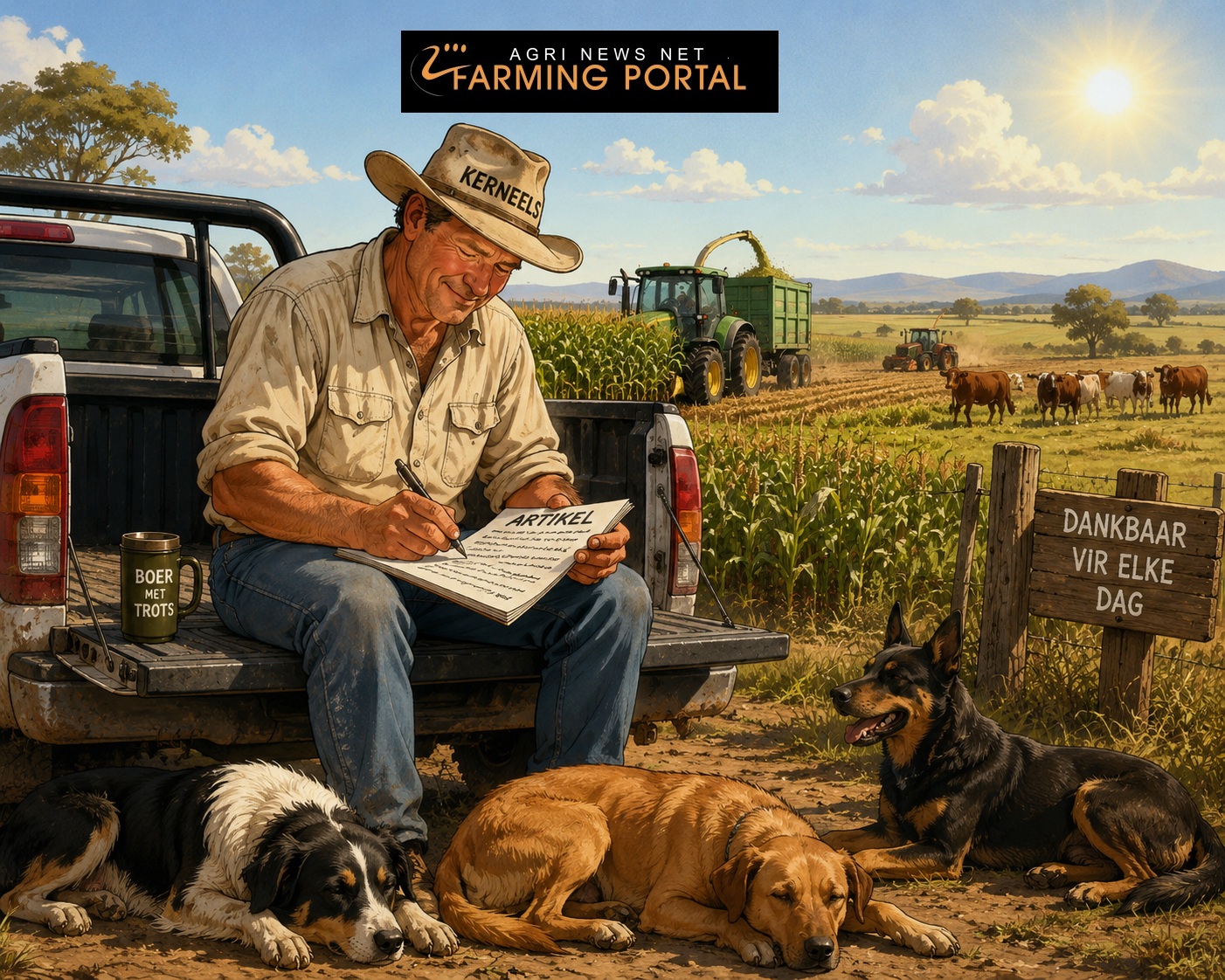
OOM KERNEELS
Vandag gesels ek Engels
Furthermore, people who have never planted a single seed in the soil and have no belief in or understanding of producing food, now want to tell farmers what to do.Agricultural organisations must now stand firmly with their farmers and not become involved with outside or foreign elements that can achieve nothing without the actual producers on the land.We need unity and support each other with dignity and respect for each other contributions.
Groete Oom Kerneels.